LYS Polychem Blog
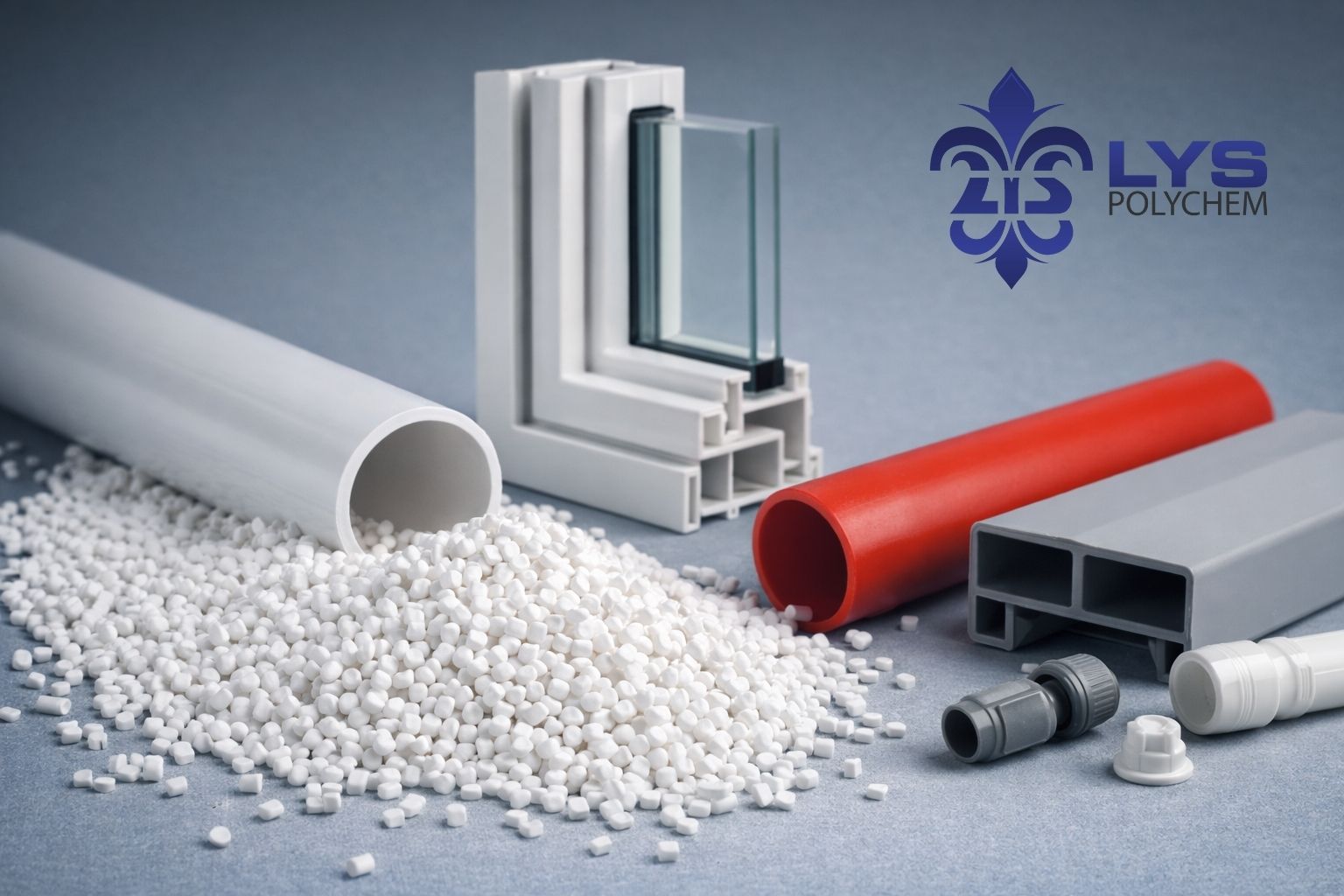
Maximize Quality and Reduce Costs with PVC Compounds
PVC compound remains one of the most common and cost-effective solutions in cable and profile production. When properly formulated, PVC offers a strong advantage in terms of both production efficiency and long-lasting performance.
Below, you will find the key points to consider when selecting a PVC compound in order to manage both quality and cost simultaneously.
PVC's Place in the Industry: Why is it Still the Most Logical Choice?
PVC is an established material used in cable insulation, sheathing materials, window profiles, technical profiles, and many more applications.
With the right PVC compound:
- Low-cost production,
- Long service life,
- Easy workability,
- Compliance with standards
are all possible at the same time. This makes PVC still extremely competitive compared to alternative materials.
Density and Cost Relationship: Buy by Weight, Sell by Length
In cable and profile production, costs are mostly calculated by weight, while sales are calculated by length. This directly translates the use of PVC compound with optimized specific gravity (density) into a strategic cost advantage.
Compounds that allow you to get more meters of product with the same kilogram of raw material reduce the cost per meter. A PVC compound with excessively high density, on the other hand, means unnecessary raw material consumption; in other words, you produce products that are “heavier but with the same performance.”
The balance here is critical:
- Overfilled, high-density compound: Cost per meter increases, mechanical performance may weaken.
- Optimized density, balanced compound: More meters produced and lower unit cost while maintaining the same quality.
This is why the key metric that purchasing and production teams should evaluate together should be “total cost and performance per meter,” not just the price per kg.
Saving Without Compromising Quality: What Makes a Good PVC Compound?
A well-designed PVC compound is easy to work with during production and performs reliably in the field (end use). Three key criteria to consider:
1. Thermal Stability – Safe Behavior During Production
- Does not burn, yellow, or form black spots during extrusion,
- Minimizes smoke, odor, and burn marks on the line.
2. Mechanical Strength – Maintaining Shape in Temperature Differences
- Does not break or crack in cold environments,
- Does not soften and lose its shape in hot environments,
- Remains stable against impact, bending, and mounting loads.
3. Fast Processability – Utilizing Machine Capacity to Full Efficiency
- Operates with stable pressure and torque in the extruder, emerges from the mold with a smooth surface, and enables higher line speeds.
- Higher daily/monthly production capacity, lower energy costs, and less setup and downtime.
PVC Compounds Optimized for Specific Applications
PVC Compound for Cable Production
- Different levels of hardness and flexibility may be required for insulation and sheathing materials.
- The type of plasticizer, stabilizer system, and additives vary according to requirements such as indoor, outdoor, low smoke, flame retardant, etc.
- Density optimization must be performed while maintaining these requirements.
PVC Compound for Profile Extrusion
- For products such as window seals, door profiles, technical profiles, and automotive gaskets, hardness, flexibility, UV resistance, and surface quality are paramount.
- Since color and UV resistance are critical, especially for exterior profiles, these parameters must be maintained while reducing density.
Practical Recommendations for Purchasing and Production Teams
- Look at the cost per meter, not just the price per kg. In trial productions, be sure to compare how many meters of product you get with the same kg of compound.
- Analyze density and length together. The additional length you achieve with a lower-density compound can more than offset the price difference.
- Clearly define quality indicators. Do not make decisions based solely on price without measuring cold break tests, temperature resistance, surface quality, and process stability.
- Conduct field tests with your technical team. Behavior under real line conditions should be as decisive as laboratory suitability.
Conclusion: You Can Manage Both Quality and Cost with the Right PVC Compound
In summary, the key to success in PVC compound selection is optimizing density without compromising thermal stability, mechanical strength, and processability. A properly formulated PVC compound:
- Allows you to get more meters of product per kg,
- Reduces scrap rates and increases production efficiency,
- Delivers long-lasting performance in your cable and profile products.
If you want to reduce your costs while improving your product quality, you can contact our technical team for PVC compound options tailored to your application and density optimization.